
The Story of Zambia’s Shared Sacred Worldview and Shared Sacred Flourishing Journey
By Rodewell Martin Bwezani Mbewe
“No one came to this training to change their religion. Yet everyone left with a changed way of seeing one another.”
Every Journey Begins With a Question
She adjusted her hijab, looked around the room and quietly took her seat.
Around her sat pastors, reverends, priests and fellow faith leaders she had never met before. Some smiled as they greeted one another. Others quietly arranged their notebooks, wondering what the next two days would bring.
For a brief moment, Naimah wondered whether she truly belonged there — not because she doubted her faith, but because she wondered whether an interfaith training could genuinely respect the uniqueness of every sacred tradition.
She was not the only one asking questions.
Across the room sat Rev. Nathan Banda from the Council of Churches in Zambia.
Nearby was Pastor Patson Chanda of the Evangelical Fellowship of Zambia.
A few seats away sat Milimo Syanyunta, representing the Zambia Conference of Catholic Bishops.
Each had travelled a different road, belonged to a different sacred tradition and carried different expectations. None of them imagined they were about to become part of Zambia’s first story of Shared Sacred Worldview and Shared Sacred Flourishing.
A Nation Already Rich in Faith
Long before this training, Zambia had already demonstrated the power of faith.
In Zambia, this journey builds on an important strength: ZINGO’s ability to convene and connect the country’s Faith Mother Bodies around issues of national and community concern. Through these established interfaith relationships, religious leaders from different traditions already have a platform for dialogue, joint reflection and collective action. Shared Sacred Worldview and Shared Sacred Flourishing therefore entered Zambia not as a standalone idea, but through a network with the relationships and structures needed to carry the conversation beyond one training room and into faith institutions and communities.
Across every province, faith communities have educated children, cared for the sick, strengthened families, responded to humanitarian crises and offered hope during difficult times. Churches, mosques and other faith institutions have remained among the most trusted pillars of society.
Yet the challenges facing Zambia today continue to test every community.
Children still face abuse and exploitation; families continue to struggle with poverty and unemployment; and communities confront disease outbreaks, environmental degradation and social division. Faith communities have responded with remarkable commitment — often, however, doing so separately.
The question facing Zambia was therefore not whether faith communities were serving.
The question was whether they could serve together, while remaining fully faithful to their own sacred traditions. This is the question Zambia answered 25 years ago by birthing The Zambia interfaith Networking Group (ZINGO)
That has become the foundation on which the Zambia Shared Sacred Worldview and Shared Sacred Flourishing is being built and the journey started then
A Different Kind of Training
From the very beginning, participants realized this was not going to be an ordinary workshop.
Nobody asked them to compare religions, compromise doctrine or suggest that their sacred traditions should become the same. Instead, participants were invited to ask a different question.
What if every sacred tradition brought its unique gifts into a shared effort to help Zambia flourish in every dimension of life?
As discussions unfolded, participants explored the meaning of Shared Sacred Worldview, recognizing that every sacred tradition offers a unique understanding of life while sharing values that promote human dignity, justice, compassion, peace and care for creation haven’t been applied to all spheres of life like has been in the Area of health particularly HIV and AIDS in Zambia.
From there, the conversations moved naturally towards Shared Sacred Flourishing, not as a theory, but as a practical way of living which Zambia has experienced in the era of the ravaging HIV virus.
“Shared Sacred Worldview is not about changing our beliefs. It is about changing the way we see one another.”
Four Faces. One Story.
As the hours passed, the training room slowly changed. People who had arrived as representatives of different Faith Mother Bodies began listening to one another with genuine curiosity. The room no longer felt divided by denominations or institutions; it felt united by purpose. It was like a revival ZINGO was being revived by the Shared Sacred Worldview!!
The four participants featured in this narrative came from different traditions. They were Naimah of the Islamic Supreme Council of Zambia (ISCZ), Rev. Nathan Banda of the Council of Churches in Zambia (CCZ), Pastor Patson Chanda of the Evangelical Fellowship of Zambia (EFZ), and Milimo Syanyunta of the Zambia Conference of Catholic Bishops (ZCCB). They did not represent only themselves; together, they represented Zambia’s diversity.
Naimah’s Journey
Naimah Banda | Islamic Supreme Council of Zambia (ISCZ)
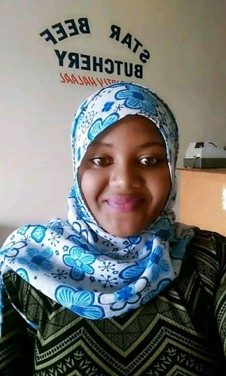
As conversations deepened, Naimah realised that something unexpected was happening. No one had asked her to become less Muslim or questioned her beliefs. Instead, participants respected one another’s sacred traditions while discovering values they already held in common. Later she reflected:
“When I accepted the invitation, I was curious but also cautious. I wondered whether an interfaith training would expect me to set aside my identity as a Muslim. Instead, I experienced something very different. Throughout the training, I was encouraged to remain true to my faith while discovering the values that connect us as human beings. I realised that Shared Sacred Flourishing is not about becoming the same. It is about bringing the best of our own faith into the service of others.”
Her words captured something many participants had quietly felt but had not yet expressed.
Nathan’s Journey
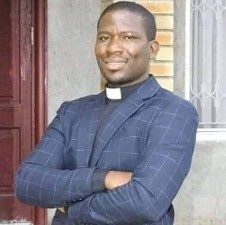
Rev. Nathan Banda | Council of Churches in Zambia (CCZ)
Rev. Nathan Banda listened carefully before responding. For him, the training brought a different realisation. He had always believed in serving communities; now he understood that Shared Sacred Worldview invites faith leaders to serve together. He reflected:
“As Christians, we often speak about loving our neighbours. This training challenged me to think more deeply about who that neighbour is. Shared Sacred Worldview reminded me that our responsibility extends beyond our own congregation. We have a shared responsibility to contribute to the flourishing of every community.”
Milimo’s Journey

Milimo Syanyunta | Zambia Conference of Catholic Bishops (ZCCB)
Milimo represented a generation that will shape Zambia’s future.
Listening to the conversations around him, he began imagining a different kind of leadership: a leadership rooted in faith, strengthened by relationships and committed to the common good. He reflected:
“As a young Catholic leader, I realised that my generation has a responsibility to inherit more than our own traditions. We must also inherit relationships of trust. If we can learn to respect one another today, we can build communities that flourish tomorrow.”
Pastor Patson’s Journey
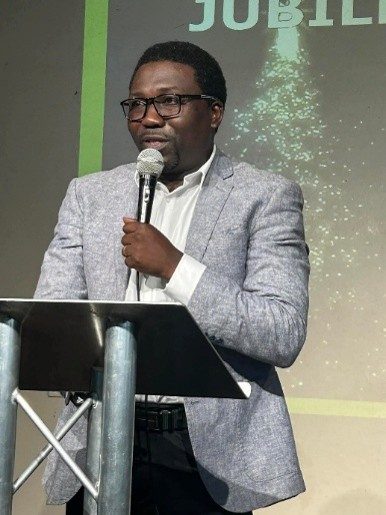
Pastor Patson Chanda | Evangelical Fellowship of Zambia (EFZ)
As the workshop drew to a close, Pastor Patson Chanda looked beyond the training room. He was already thinking about what would happen when everyone returned home. For him, Shared Sacred Flourishing would only become meaningful when it shaped everyday ministry. He reflected:
“The workshop ends today, but Shared Sacred Flourishing begins tomorrow. It begins when I return to my congregation, when I teach young people, when I work with other faith leaders and when every ministry becomes an opportunity to serve the common good.”
The Turning Point
The facilitator asked one final question: “What will you take home from this journey?” The room fell silent. Then, one after another, participants shared not what they had learnt, but how they had changed.
Naimah had discovered that collaboration strengthens identity rather than threatening it. Nathan had discovered that collaboration is part of his calling. Milimo had discovered hope for a new generation of faith leaders, while Pastor Patson had discovered that the real work begins after the workshop ends. They were different voices from different sacred traditions, now carrying one shared vision.
“The flourishing of one community should be inseparable from the flourishing of every community.”
What Changed?
The most significant change was not that four people attended a training. It was that four leaders returned home seeing one another differently. Their beliefs remained unchanged and their sacred identities remained intact. What changed was their understanding that flourishing cannot be achieved in isolation: communities must flourish together, society flourishes together and creation must flourish together. Shared Sacred Worldview had become more than a framework, and Shared Sacred Flourishing more than a concept; together, they had become a shared commitment.
After the Training: When Flourishing Becomes Practice
The real test of Shared Sacred Flourishing begins when participants leave the training room. For Naimah, Rev. Nathan Banda, Milimo Syanyunta and Pastor Patson Chanda, the two-day encounter was therefore not intended to end with new knowledge. Each returned to an active space of influence within their respective faith structures, carrying an opportunity to translate the principles of Shared Sacred Worldview into everyday leadership.
Their reflections point towards something practical: Shared Sacred Flourishing does not necessarily require faith communities to create entirely new programmes. It begins by changing how they approach the work they are already doing. In Zambia, this matters because ZINGO already provides an interfaith platform through which Faith Mother Bodies and their leaders can connect, learn and carry shared approaches into existing structures rather than building parallel ones.
For Naimah, this means creating more deliberate spaces in which Muslim women and young people can participate confidently in interfaith conversations. Her experience shows that inclusion becomes meaningful when people are not merely invited into the room, but are able to contribute from the richness of their own sacred tradition.
“One thing I want to carry forward is creating spaces where young people and women can speak from their own faith and still feel that they are part of the wider conversation. We should not only meet when there is a programme. We need relationships that continue in our communities.”
— Naimah Banda, ISCZ
Her next step therefore becomes practical: taking the conversation into youth and women’s spaces, identifying issues that matter across communities, and using those spaces to strengthen relationships with people of other faith traditions.
For Rev. Nathan Banda, the opportunity lies in moving interfaith collaboration from occasional national engagements into the ordinary structures through which churches already serve communities. His insight is that Shared Sacred Flourishing becomes sustainable when it is mainstreamed rather than treated as another stand-alone project.
“We already have structures, congregations and leaders reaching communities. The question after this training is how we use what already exists differently. If Shared Sacred Flourishing remains something we discuss only when we meet nationally, then we will have missed the opportunity.”
— Rev. Nathan Banda, CCZ
This points towards a practical approach: taking the conversation through existing church and interfaith structures and encouraging leaders to ask, “Who else should be at the table?” before responding to community challenges.
For Milimo, the challenge is generational. His reflection places young people not merely among the beneficiaries of interfaith work, but among those who should shape it. Youth already interact across religious boundaries in schools, universities, workplaces, sport and community life. Shared Sacred Flourishing provides an opportunity to turn those everyday relationships into deliberate bridge-building.
“Young people should not inherit interfaith dialogue as something already designed for us. We should help shape it. We can begin with practical things — serving communities together, caring for the environment, supporting vulnerable people and creating spaces where young people of different faiths actually know one another.”
— Milimo Syanyunta, ZCCB
His insight gives the journey a particularly practical direction: start with shared action. A community clean-up, youth dialogue, visit to vulnerable families or joint community initiative may appear small, but such actions allow trust to grow through experience rather than conversation alone.
For Pastor Patson Chanda, the challenge is multiplication. If those trained remain the only people who understand Shared Sacred Worldview and Shared Sacred Flourishing, the journey will remain small. His emphasis is therefore on taking the learning into existing ministry spaces and equipping other leaders to carry it further.
“We cannot become custodians of information. We were trained so that the learning can move. I should be able to sit with another pastor, a youth leader or another faith leader and ask: what can we practically do together that helps our community flourish?”
— Pastor Patson Chanda, EFZ
His reflection moves the story from participation to cascade. The four participants become more than examples of change; they become multipliers who can help translate the approach into language and actions that make sense within their own faith communities.
Four People to Keep Following
This is where the Zambia story becomes particularly worth following. Naimah brings the perspective of women, young people and Muslim participation. Nathan brings the possibility of mainstreaming the approach through established church and ecumenical structures. Milimo represents youth leadership and a generation capable of building interfaith relationships differently. Patson brings the emphasis on multiplication, ministry and taking the learning beyond those originally trained.
Their journeys therefore provide four practical lenses through which the progress of Shared Sacred Flourishing in Zambia can continue to be documented. The next significant change may not be another training. It may be the first time Naimah convenes young Muslim women around a shared community concern. It may be a congregation influenced by Nathan beginning to work differently with another faith community. It may be young Catholics and Muslims brought together through an initiative championed by Milimo. Or it may be another group of pastors introduced to Shared Sacred Flourishing because Patson chose not to keep the learning to himself.
Those are the stories worth returning to. In the months ahead, the important question will therefore not simply be, “What do the four remember from the training?” It will be, “What happened because they were trained?” And perhaps even more importantly: “Who else is flourishing because these four decided to act?”
The Story Is Still Being Written
Naimah returns to the Islamic Supreme Council of Zambia, Rev. Nathan Banda to the Council of Churches in Zambia, Milimo Syanyunta to the Zambia Conference of Catholic Bishops, and Pastor Patson Chanda to the Evangelical Fellowship of Zambia. They will worship in different places, teach different congregations and pray in different ways, yet they now carry one shared conviction: Zambia flourishes when every sacred tradition brings its unique gifts into the service of humanity.
This publication is not the end of their story, nor is it the end of Zambia’s story. It is the continuation of a national journey in which faith communities begin to realize that Shared Sacred Worldview enables us to see one another differently, while Shared Sacred Flourishing calls us to work together so that people, society and creation may flourish.
Final Reflection
“Shared Sacred Flourishing is not about changing who we are. It is about discovering that the deepest values of our sacred traditions call us to walk together so that people, society and creation may flourish.”
“We remain different in our sacred traditions, but we recognize that our shared responsibility is greater than our differences. Together, we commit ourselves to promoting the flourishing of people, society and creation across Zambia.”
This is the story of Zambia’s Shared Sacred Worldview and Shared Sacred Flourishing journey — a story still being written.
The Last word from ZINGO Executive Director, “Having being around from the very early days of ZINGO, my fear was will the spirit of ZINGO die, here we are with Shared Sacred world view; Shared Sacred Flourishing” the ZINGO spirit is revived – Sivers Hamukoma