
A Collective Moral Response to the Mozambique Flood
| We stand in prayerful solidarity with the people of Mozambique as they endure the devastating effects of severe flooding, which has displaced families, damaged livelihoods, and disrupted the delicate fabric of community life. In this moment of profound loss and uncertainty, we affirm the inherent dignity of every person affected and our shared responsibility to respond with compassion, justice, and sustained care. |
| True solidarity is measured not by words, but by how we protect dignity and restore life. |
| Across Africa’s religious traditions, there is a shared moral conviction that human life is sacred and inseparably connected to the wellbeing of others and to the Earth itself. When one community suffers, all are diminished, and there comes a wisdom rooted in harmony with the Earth and responsibility to the community of life. Many traditions hold that when the balance between humanity, nature, and the spiritual order is broken, suffering follows. Healing, therefore, requires collective action guided by respect, restraint, and care for both people and land. As the Christian scriptures remind us, “If one part suffers, every part suffers with it; if one part is honoured, every part rejoices with it.” (1 Corinthians 12:26). This truth resonates deeply with African communal values and spiritual traditions that understand life as fundamentally relational. Islam teaches that mercy lies at the heart of faithful action. The Qur’an calls believers to generosity in times of hardship, “…..Whoever saves one life, it is as if they have saved all of humanity…..” (Qur’an 5:32). This principle urges concrete solidarity, especially with those whose vulnerability has been intensified by disaster. Judaism teaches moral accountability toward the vulnerable, instructing, “Do not stand idly by while your neighbor’s blood is shed” (Leviticus 19:16). This call rejects indifference and affirms the ethical duty to act when lives and dignity are at risk. In African Indigenous wisdom, often expressed through the ethic of Ubuntu, we are reminded that a person is a person through others. This moral vision challenges isolation and insists that resilience is built through mutual support, shared responsibility, and compassion in action. The suffering caused by this flooding also speaks to a wider moral challenge. Environmental degradation and climate instability continue to place the poorest and most vulnerable at greatest risk. Faith traditions across Africa consistently affirm that the Earth is not a possession to be exploited but a trust to be safeguarded for present and future generations. We recognize and commend the leadership of the Government of Mozambique, national institutions, and humanitarian partners working under extremely difficult conditions to respond to this emergency. At the same time, we underscore that emergency relief must be accompanied by sustained commitment, ethical responsibility, and long-term investment in resilience, guided by values that place people, community, and care for the Earth at the center. We call upon faith leaders, governments, international partners, and communities of goodwill to translate solidarity into action. Let compassion guide response. Let justice shape recovery. Let shared flourishing strengthen resilience. In standing with Mozambique, we affirm a conviction shared across our traditions: healing and renewal become possible when love, mercy, and solidarity inform our call of Shared Sacred Flourishing. In solidarity, Dr. Francis Kuria Secretary General |
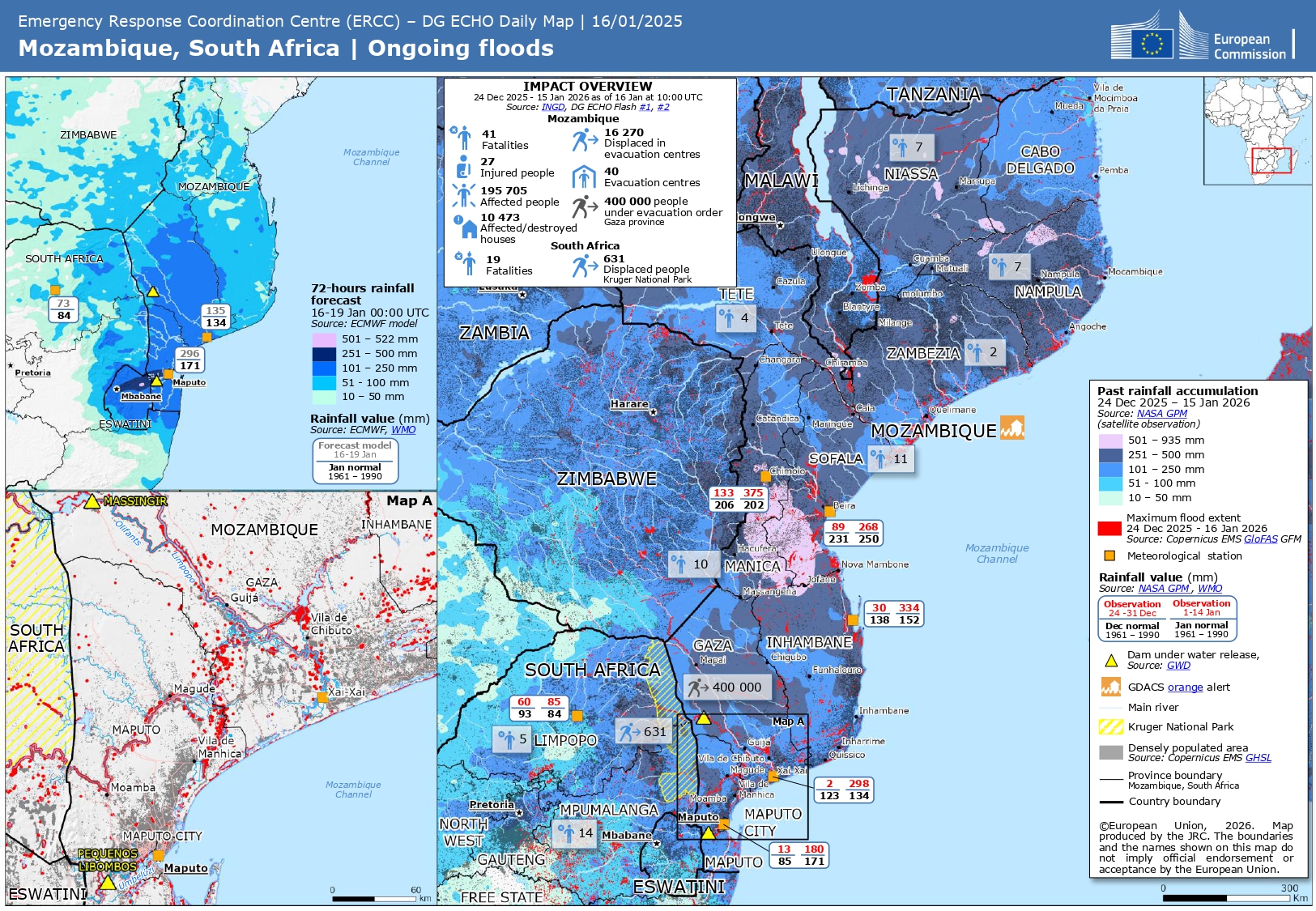
Courtesy of ERCC – Emergency Response Coordination Centre