
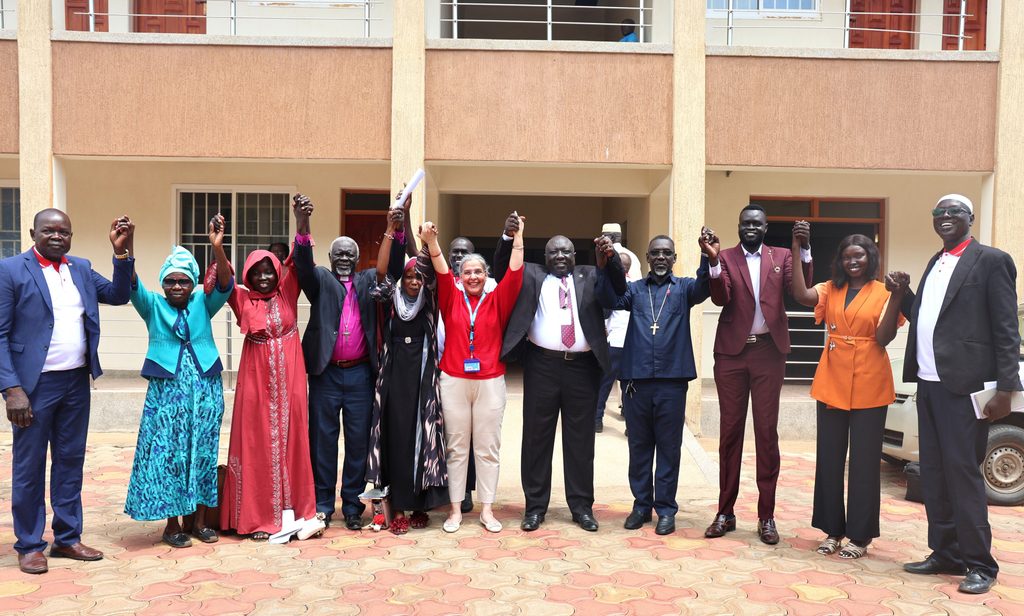
IRCSS brings together religious leaders and traditional chiefs as ACRL-RfP continues to advance faith-led Ebola preparedness and community engagement across the region.
As concerns over the potential spread of Ebola from the Democratic Republic of the Congo (DRC) underscore the importance of regional preparedness, the Inter-Religious Council of South Sudan (IRCSS) is strengthening community awareness and engagement through faith leadership.
On 1 October 2026, IRCSS conducted its first Ebola awareness workshop in South Sudan, bringing together religious leaders and traditional chiefs. Supported by UNICEF. The initiative focused on strengthening community awareness, promoting accurate health information, discussing prevention measures and examining the role of religious and community leaders in protecting public health.
The workshop provided a platform for fruitful discussions on how faith and traditional leaders can support preparedness efforts and help communities access reliable information during public health emergencies.
Building on Regional Ebola Preparedness Efforts
The initiative builds on wider efforts by the African Council of Religious Leaders–Religions for Peace (ACRL-RfP) to strengthen the contribution of faith communities to Ebola preparedness and response.
In June 2026, ACRL-RfP and UNICEF co-hosted the regional webinar series Faith and Science in Conversation: Ebola Prevention, Preparedness and Community Engagement in Africa. Held on 9 and 10 June for Anglophone and Francophone participants respectively, the sessions brought together religious leaders, scientists, public health experts and development partners to discuss preparedness, community engagement and the role of faith networks in supporting public health efforts.
The discussions highlighted that effective Ebola prevention requires both scientific expertise and trusted community engagement. Participants examined the challenges posed by misinformation, fear and stigma, as well as the importance of promoting accurate information, encouraging appropriate health-seeking behaviour and strengthening collaboration between faith networks and public health institutions.
As part of these efforts, ACRL-RfP, UNICEF and Religions for Peace also worked together to develop a Faith Engagement Guide for Risk Communication and Community Engagement (RCCE). The guide provides practical direction for faith leaders on Ebola-related information, prevention, pastoral care, safe and dignified burials, addressing stigma and countering misinformation.
These regional initiatives provide a foundation for strengthening engagement with national interreligious councils and adapting preparedness approaches to local contexts.
Trusted Leadership at the Community Level
Religious leaders and traditional chiefs have established relationships with the communities they serve. This positions them to help communicate verified health information, address rumours and fear, and encourage people to follow guidance from credible public health authorities.
Their role is particularly important during health emergencies, when misinformation and mistrust can undermine prevention efforts. By working alongside health institutions and humanitarian partners, faith leaders can help bridge the gap between scientific guidance and community understanding.
The participation of Christian and Muslim clergy in the IRCSS initiative also underscores the value of collaboration across faith communities in promoting shared responsibility for public health.
Sustaining Collaboration for Preparedness
The South Sudan initiative demonstrates the importance of translating regional dialogue and guidance into practical engagement at the national and community levels.
Continued collaboration among ACRL-RfP, national interreligious councils, faith networks, UNICEF and public health partners will be important in strengthening community preparedness and ensuring that reliable information reaches those who need it.
As Ebola preparedness remains a regional concern, sustained investment in trusted community leadership can help strengthen prevention efforts, build resilience and support coordinated responses to public health emergencies.
Through faith, science and solidarity, religious leaders and their partners can help communities become better informed, more prepared and better equipped to protect lives.